
 Pewter, was described by author and lecturer Andrew Spira as a “utilitarian material with no airs and graces, evoking daily contentment”
Originating in the Near East, remains of pewter coins and tableware have been found in ancient Egypt and Rome. Pewter was cheaper than silver but more refined than wood or pottery. It is one of the oldest alloys and was made up then of tin, copper, bismuth, antimony and particularly lead (85%). Melted, it looked like mercury and was poured into perfectly designed molds which were very valuable as they could be used repeatedly.
From the15th Century, most British pewter came from Cornwall and was widely used for everyday objects, such as plates, cups, particularly tankards, spoons and other tableware. Pewter didn’t aspire to be fashionable. Priests were buried with pewter chalice cups, and pilgrims bought pewter items as souvenirs of their pilgrimage. By the 17th Century, after molding, Pewterers used lathe-turning techniques (a technique which lasted well into the 20th Century) to refine and improve the shape and etchings were engraved inside the molds to imprint raised designs onto the vessel. All the decoration went into the mold. Then, because pewter is a soft metal, Pewterers began to engrave straight onto the pewter and became very adept at creating beautiful sophisticated designs. The popularity of engraved, ornamental pewter during the 17th Century became immense, so much so that pewter aspired to have the same prestige as silver and mimic their hallmark styles. However, pewter tableware was far more synonymous with pubs and jovial times. The Guild of Pewterers regulated its production and used its intricately designed pewter for celebratory events.
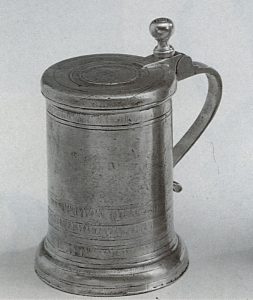 During the 18th Century, with the introduction of porcelain and mass production of glass and pottery, pewter’s popularity waned, also because of its unhealthy lead content. Porcelain was welcomed as being hygienic, clean and attractive, Pewter became sidelined and increasingly associated with the vintners, wine and beer trade. Pewter measures were used to take wine from barrels. Pewter also became increasingly used by modest or poor families, though it was also used in furniture making and in supports for glass ware.
In the 20th Century pewter regained some popularity during the Art Nouveau and Art Deco movement with decorative stylish pieces (Liberty’s Archibald Knox collection). Nowadays, modern pewter is made mostly of tin, antimony and copper alloy and has a niche appeal for craft material and heritage reproduction.
Liz Beecheno