
Annalie Talent, lecturer and educationalist, delivered a lively and informative talk on how 18th-century writers and poets viewed the natural world—a time when animals were largely regarded as mindless beings incapable of feeling pain. Samuel Taylor Coleridge was among the first to challenge this notion, referring to birds, insects, and animals as “God’s creatures” in his poem The Rime of the Ancient Mariner.
Naturalist Gilbert White, in his seminal work The Natural History of Selborne, spoke tenderly of the likes, 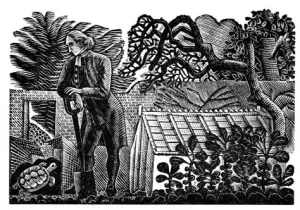 dislikes, and personality of his pet tortoise, Timothy. Similarly, poet William Cowper found solace in caring for a pet hare, which helped ease his depression.
By the 19th century, debates surrounding animal cruelty were gaining momentum. Writers such as William Blake and Mary Wollstonecraft, along with artists like William Hogarth and Thomas Bewick, advocated for kindness and respect toward all creatures. Through beautifully read excerpts, Annalie highlighted how William Wordsworth’s The Butterfly compared the delicate insect to the beauty of an entire landscape. Robert Burns’s To a Mouse and Anna Letitia Barbauld’s poignant The Mouse’s Petition gave small creatures a voice—pleading for compassion and even freedom.
Artist Edwin Landseer captured the loyalty of animals in his painting Attachment, which depicts a faithful dog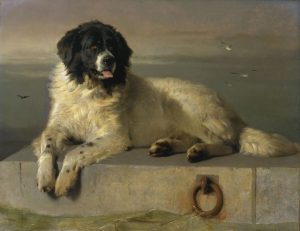 remaining beside his master, Charles Gough, after his tragic death. Landseer also painted Lord Byron’s beloved pet dog, Boatswain—of whom Byron wrote, “More faithful than men, and I trust you more.”
The Brontë sisters named their pet canaries, while Elizabeth Barrett Browning tenderly celebrated the gentle, loving nature of her dog in the poem Flush.
By the late 19th century, attitudes toward animals were rapidly evolving. Compassion and empathy began to shape public perception, especially after Queen Victoria extended her patronage to the SPCA (Society for the Protection of Animals), which later became the RSPCA.
This was a highly enjoyable and entertaining lecture, richly illustrated with literary passages, paintings, and historical anecdotes. A thoroughly engaging experience.
Liz Beecheno